

Acai Berry Powder from Brazil for Food, Beverage and Supplement Formulations
Discover Brazilian Acai Berry Powder for food, beverage, nutrition and supplement formulations. Learn about applications, quality evaluation, product development and international B2B supply.
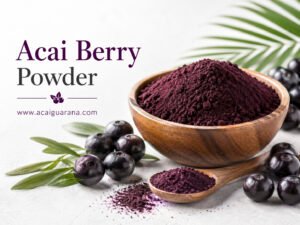
Acai Berry Powder is a Brazilian fruit ingredient produced from the fruit of Euterpe oleracea Mart., a palm species strongly associated with the Amazon region.
The powdered format offers food, beverage and supplement companies a practical alternative to refrigerated or frozen acai preparations. It can be weighed, blended with other dry ingredients and incorporated into different industrial formulations.
Acai is recognized for its characteristic dark-purple color and distinctive fruit profile. Scientific research has identified anthocyanins, proanthocyanidins, flavonoids, fatty acids and other naturally occurring compounds in analyzed acai fruit materials.
However, the composition of a commercial Acai Berry Powder can vary according to the fruit material, processing method, ingredient concentration, drying conditions and storage practices.
For this reason, buyers should evaluate the technical documentation and analytical results of the specific product being offered.
Acai Berry Powder is a dry fruit ingredient developed from processed acai fruit material.
Depending on the product specification, it may be produced from acai pulp, pulp and skin fractions, concentrated fruit material or another declared acai preparation.
A professional product specification should clearly identify:
Buyers should not assume that every product sold as Acai Berry Powder has the same composition.
Commercial powders may differ in color, flavor, fruit concentration, carrier content, density, dispersibility and particle size.
Acai Berry Powder allows brands and industrial buyers to introduce a recognizable Brazilian fruit ingredient into dry formulations.
Its commercial advantages may include:
The performance of the ingredient should always be confirmed through formulation trials.
The dark-purple appearance of acai fruit is associated partly with naturally occurring anthocyanin pigments.
Scientific studies have identified cyanidin derivatives among the principal anthocyanins found in analyzed acai materials.
Other reported components include:
These findings are scientifically relevant, but they do not mean that every commercial Acai Berry Powder contains identical amounts.
The concentration of these compounds can vary significantly between products and production lots.
Statements such as “rich in anthocyanins” or “standardized antioxidant content” should only be used when supported by valid analytical results for the supplied product.
Acai Berry Powder can influence the appearance, aroma, flavor and texture of a finished formulation.
The ingredient may produce purple, violet, burgundy or dark-red tones.
The final appearance depends on:
Color stability should be tested throughout the proposed shelf life of the finished product.
Acai Berry Powder may have a fruity, earthy and slightly tart flavor profile.
Its intensity depends on the concentration of acai fruit material and the processing method.
It may be combined with:
The best combination depends on the intended product and target market.
Acai Berry Powder can influence thickness, sedimentation and mouthfeel.
It should not automatically be expected to dissolve completely in water like sugar or a soluble flavor ingredient.
Before approving the powder for a beverage, developers should evaluate:
Beverage development is one of the main commercial areas in which Acai Berry Powder may be used.
Acai Berry Powder can be combined with other dry ingredients in drink mixes intended for preparation with water, milk or plant-based beverages.
Possible applications include:
Companies should confirm that the powder disperses adequately under the preparation instructions provided to the consumer.
Acai Berry Powder may be incorporated into formulas containing:
Developers should evaluate whether the acai flavor and color remain noticeable after stronger ingredients are added.
The ingredient may be evaluated as a fruit component in sports nutrition powders, active-lifestyle blends and post-workout beverage concepts.
The presence of acai alone does not prove that a finished product increases energy, improves performance or accelerates recovery.
Any performance-related statement must be properly supported and permitted in the destination market.
Restaurants, cafés and smoothie businesses may use Acai Berry Powder in prepared drinks and fruit blends.
The company developing the beverage should establish:
Acai Berry Powder may also be evaluated for dry, semi-dry and refrigerated food formulations.
Possible applications include:
Acai may be combined with coconut, banana, cocoa, nuts, seeds and other fruit ingredients.
Acai Berry Powder may be evaluated in:
Product developers should verify whether the desired color and flavor remain stable throughout processing and storage.
Possible applications include:
Heat can alter the color and flavor of fruit ingredients.
Testing under actual production conditions is therefore necessary.
Acai Berry Powder may be tested in:
Proteins, minerals, acidity and fermentation may influence color, texture and stability.
Acai Berry Powder may be used in dietary supplement formulations when its composition and legal status comply with the requirements of the destination country.
Possible formats include:
Capsule and tablet developers should evaluate:
Acai Berry Powder should not be presented as a medicine or treatment for a health condition.
The finished-product company remains responsible for dosage, claims, warnings, labeling and regulatory compliance.
Some fruit powders contain processing carriers used to support drying, stability or powder handling.
Buyers should request the complete ingredient declaration and confirm:
The color should be evaluated:
Fruit powders can absorb moisture from the environment.
Excessive moisture can affect:
Before approving a commercial order, importers should request and evaluate the available technical documentation.
Important documents may include:
The required documents depend on the destination country and intended application.
A structured sample evaluation allows purchasing and product-development teams to compare different powders objectively.
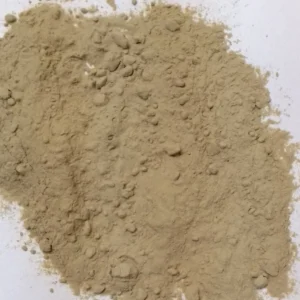
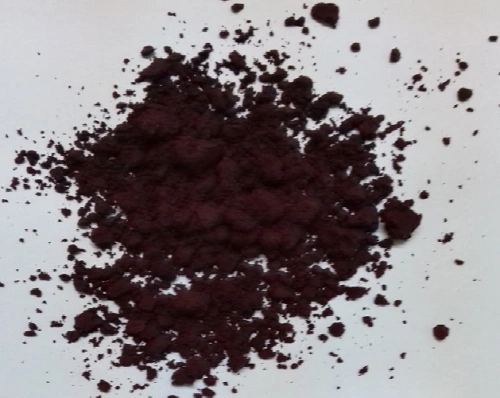
Compare the powder’s color, uniformity and the presence of visible agglomerates.
Check whether the aroma is characteristic and free from unexpected or unpleasant odors.
Evaluate the flavor of the powder alone and in the intended commercial formulation.
Observe the prepared beverage immediately after mixing and after a defined resting period.
Monitor possible color changes during processing and storage.
Confirm that the sample matches the technical specification provided by the supplier.
Establish which analytical and sensory parameters should remain consistent between commercial lots.
Verify whether the proposed packaging is suitable for storage, transportation and industrial use.
Review:
Scientific research has examined the composition, processing characteristics and potential biological properties of acai fruit materials.
Studies have identified anthocyanins, proanthocyanidins, flavonoids, fatty acids and other constituents in specific acai preparations.
Laboratory, animal and human studies have also investigated antioxidant markers, lipid-related parameters, inflammation and exercise-related responses.
However, many human studies are preliminary, involve small groups or evaluate specific acai preparations.
These studies should be presented as scientific background and not as proof that every commercial Acai Berry Powder produces the same results.
Acai Berry Powder should not be promoted as a product that diagnoses, prevents, treats or cures disease.
Prover Brasil for Export Ltda. supplies Brazilian fruit powders and botanical ingredients to importers, distributors and industrial buyers worldwide.
Companies interested in Acai Berry Powder should provide:
Providing these details helps the export team evaluate product suitability, availability, commercial conditions and freight alternatives.
Contact Prover Brasil for Export Ltda. to request information about Brazilian Acai Berry Powder for commercial applications.
When requesting a quotation, include:
Exporter: Prover Brasil for Export Ltda.
Website: www.acaiguarana.com
The botanical name commonly associated with Brazilian acai is Euterpe oleracea Mart., a palm species belonging to the Arecaceae family.
No. Acai Berry Powder is a dry ingredient, while frozen acai pulp must remain under frozen storage and transportation conditions.
Their composition, handling, texture and formulation behavior may be different.
It may be used in powdered beverages, smoothie mixes, food preparations, nutrition bars, cereals, desserts, capsules, tablets, sachets and fruit powder blends.
Anthocyanins have been identified in analyzed acai fruit materials.
However, the actual amount in a commercial powder should be confirmed by analytical testing.
No. Products may differ in:
Not necessarily.
Some products disperse or remain suspended rather than dissolving completely.
The result depends on particle characteristics, ingredient composition, processing and the complete beverage formula.
Yes, it may be evaluated for capsule formulations.
The developer should test powder flow, density, moisture, capsule size and compatibility with other ingredients.
Yes, it may be tested in protein beverage formulations.
Proteins can influence color, flavor, texture and sedimentation, so formulation trials are necessary.
Acai fruit has a naturally dark-purple appearance.
The exact color of the powder may vary according to processing, concentration, additional ingredients and storage conditions.
Some powdered fruit ingredients contain drying carriers.
Buyers should request the complete ingredient declaration and confirm whether a carrier is present.
Importers should normally evaluate:
No.
Acai Berry Powder should not be advertised as diagnosing, treating, preventing or curing any disease.
Health and nutrition claims must comply with the regulations of the destination market.
Yes.
Sample testing helps the buyer evaluate color, flavor, dispersibility, compatibility and stability in the intended formulation.
The supplier’s storage instructions should always be followed.
In general, fruit powders should be kept sealed, dry and protected from:
Buyers should provide their company name, destination country, required quantity, intended application and preferred shipping method through www.acaiguarana.com
Study: Schauss et al. — Phytochemical and nutrient composition of an Amazonian acai fruit powder.
Link: https://pubmed.ncbi.nlm.nih.gov/17061839/
This analytical study identified anthocyanins, proanthocyanidins, flavonoids, fatty acids, amino acids and other components in the acai preparation examined.
Study: Tonon, Brabet and Hubinger — Influence of process conditions on the physicochemical properties of acai powder.
Link: https://www.sciencedirect.com/science/article/abs/pii/S0260877408001179
The study examines how spray-drying conditions can influence the physical and chemical characteristics of acai powder.
Study: Tonon, Brabet and Hubinger — Anthocyanin stability and antioxidant activity of powdered acai juice.
Link: https://www.sciencedirect.com/science/article/pii/S0963996909003895
This research evaluates changes in anthocyanins and laboratory antioxidant measurements during storage.
Study: Earling et al. — Analysis of commercial acai dietary supplements.
Link: https://pubmed.ncbi.nlm.nih.gov/31280417/
The research identified differences in phenolic and anthocyanin content among tested commercial acai products.
Study: Udani et al. — Pilot study of an acai preparation in overweight adults.
Link: https://pmc.ncbi.nlm.nih.gov/articles/PMC3118329/
This was a small, uncontrolled human pilot study examining selected metabolic markers.
Study: Sadowska-Krępa et al. — Acai beverage supplementation and exercise-related markers.
Link: https://pmc.ncbi.nlm.nih.gov/articles/PMC4447763/
This pilot study evaluated selected blood markers and sprint-performance measurements.
Study: Laurindo et al. — Acai in Health and Disease.
Link: https://pmc.ncbi.nlm.nih.gov/articles/PMC9965320/
This article reviews acai composition and findings from laboratory, animal and human research.
Study: Vargas et al. — Effects of spray drying with maltodextrin on acai pulp.
Link: https://pubmed.ncbi.nlm.nih.gov/39040403/
The research evaluates how spray drying can influence the physicochemical and nutritional characteristics of acai pulp powder.
This page provides general information for commercial ingredient evaluation and product development.
Acai Berry Powder is presented as a food or formulation ingredient and not as a medicine.
It is not intended to diagnose, treat, cure or prevent disease.
Composition, nutritional values, anthocyanin levels, microbiological limits and other analytical characteristics should be confirmed through the product specification and Certificate of Analysis.